
Why Mice Get Into Parked Cars And What To Do
Mice In Parked Cars: Warning Signs And Prevention
A few seeds beside the battery or shredded material under the hood can be the first sign that mice have moved into a parked car. Their activity can stay hidden until you notice droppings, an unfamiliar smell, or damage during routine maintenance.
Finding evidence of mice raises two immediate questions: whether the vehicle needs a mechanic’s attention and what is attracting rodents to the parking area. Addressing both helps you deal with the current problem and reduce opportunities for another visit.
Why Mice Get Into Parked Vehicles
A car offers sheltered spaces where mice can nest without being easily seen. The engine compartment, air filter housing, glove box, areas beneath seats, and spare tire compartment are all possible hiding places. Vehicles that sit unused for long periods give rodents more opportunity to settle in undisturbed.
Closed doors and windows don’t seal every possible route inside. Mice can reach interior spaces through ducting, openings around cables, or rust holes in the body. Some access points are hidden behind components, so a quick look through the windows won’t tell you whether the car is occupied.
Food makes the surroundings more inviting. Crumbs and forgotten snacks inside the cabin can attract rodents, while birdseed, pet food, and garbage near the parking spot provide nearby meals. Even a tidy vehicle may offer shelter when mice are already active in the garage or yard.
Warning Signs To Check Before You Drive
Use a flashlight to look into accessible areas of the cabin and trunk. Check beneath floor mats and seats, inside the glove box, and around the spare tire compartment. Keep your hands away from suspected droppings or nests, and leave dismantling panels or engine components to someone qualified.
Several signs deserve a closer look:
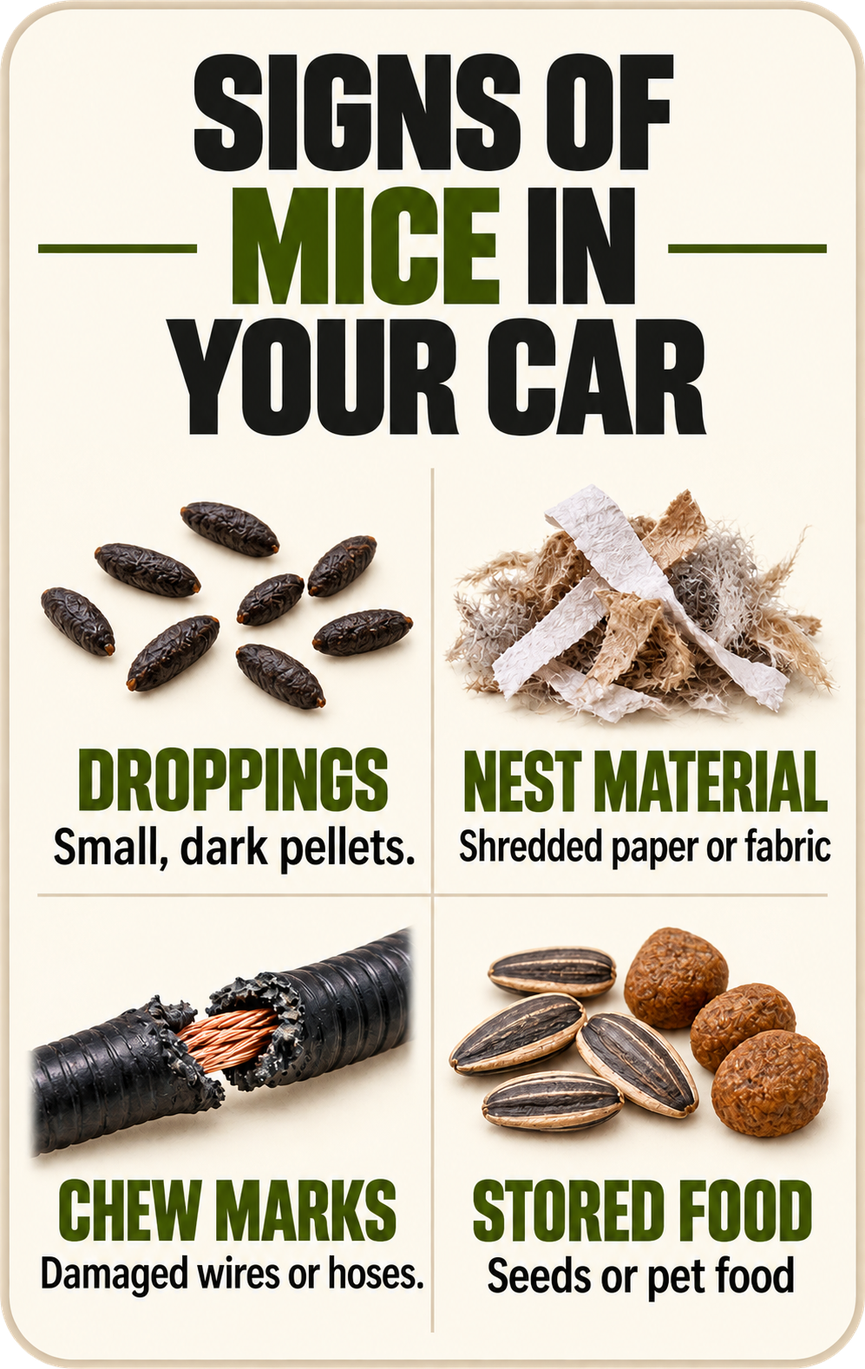
- Small, dark droppings on mats, upholstery, or engine components.
- Shredded paper, fabric, or insulation gathered into a nest.
- Gnaw marks or missing insulation on visible wiring.
- Seeds, nuts, or pet food collected in an unusual place.

A persistent unfamiliar odor can accompany rodent activity, but smell alone doesn’t establish the cause. Look for physical evidence and tell your mechanic where the odor seems strongest. Scratching sounds while the vehicle is off are another reason to investigate.
Take photos of what you can see without disturbing it, and note when you first noticed the problem. Record whether the car has been sitting, where it is usually parked, and whether you have also seen mouse activity in the garage. These details give the mechanic and pest control technician a clearer starting point.
What To Do About Nests Or Chewed Wiring
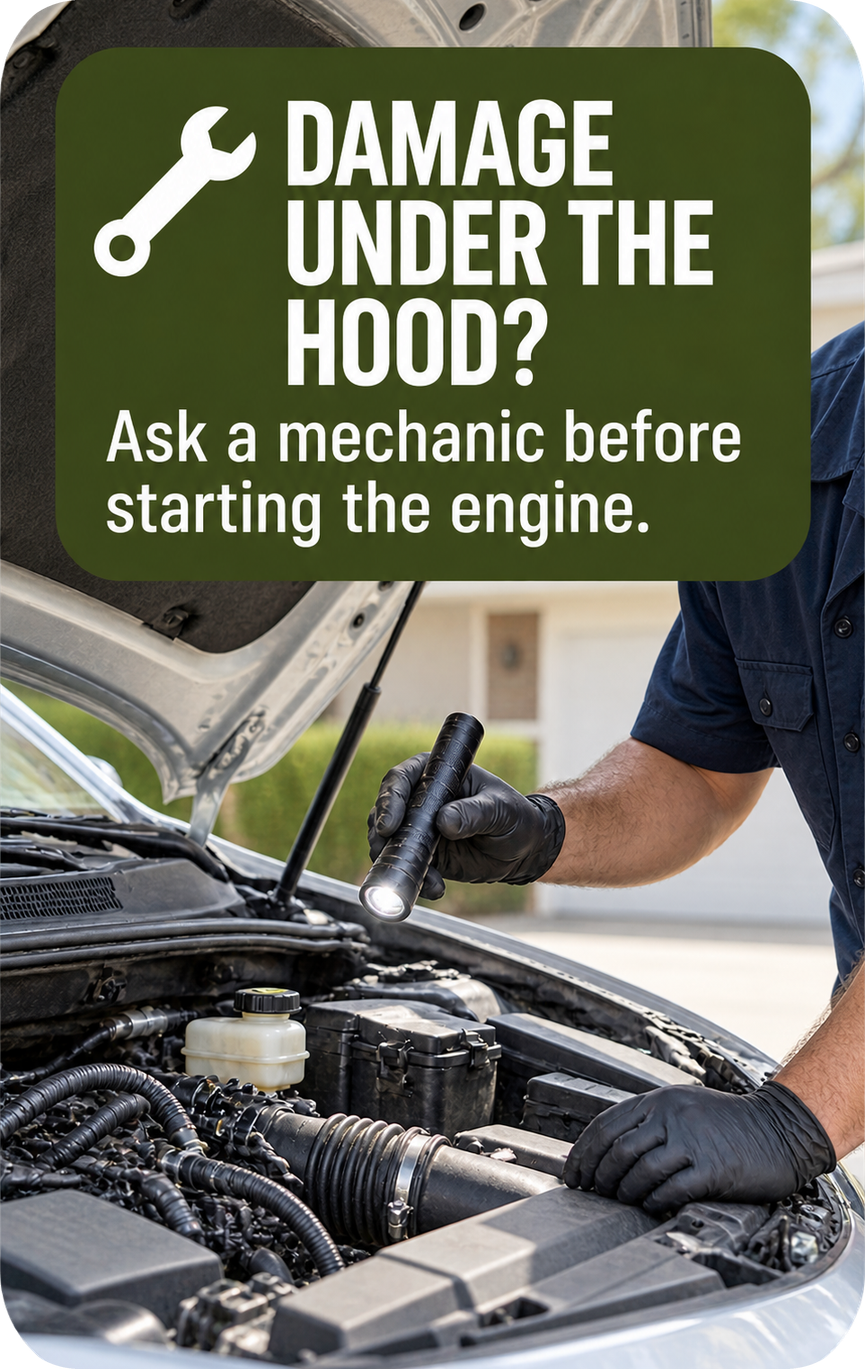
If you find damaged wiring, chewed hoses, or nesting material under the hood, contact a mechanic before starting the engine. Explain what you found and ask whether the vehicle should be transported for inspection. Air intake and filter areas deserve particular attention after a vehicle has been idle for an extended period. Nesting material can interfere with airflow, and contamination may extend into ventilation components. An automotive professional can assess inaccessible areas, replace affected filters, and identify components that need cleaning or repair.
Keep the engine off while dealing with suspected contamination. For a vehicle already in a well-ventilated location, open the hood, doors, and trunk and allow 20 minutes of airing out before inspection. If you suspect damage in a garaged vehicle, ask the mechanic how to proceed before moving it.
Don’t sweep, dry-vacuum, or blow out droppings and nesting material with compressed air. Avoid pressure washing contaminated areas, too. Rodent waste needs appropriate disinfection before removal, with gloves and other precautions suited to the work. Ask the automotive professional how contamination will be handled, especially inside air ducts or around electrical components.
Before collecting the repaired vehicle, ask which areas were inspected and whether any follow-up is needed. Keep that information with your photos so you can recognize a new problem if signs return.

Reduce Mouse Activity Around The Parking Area
Start with what mice can eat. Remove food wrappers and snacks from the vehicle, clean up crumbs, and empty bags that carried groceries or pet treats. In the garage, store birdseed and pet food in rodent-resistant containers with tight lids, and deal promptly with spills. Check nearby garbage storage and outdoor feeding areas as well.
Look at the garage with the car pulled out after any vehicle concerns have been resolved. Clear piles of cardboard and other stored material that make inspection difficult. Check the bottom and corners of the garage door for gaps, along with openings around utility lines. Arrange repairs to damaged door seals and use durable, rodent-resistant materials for structural gaps.
For a vehicle used infrequently, make visual checks part of its storage routine and inspect it before returning it to service. Don’t rely on an ultrasonic device to protect the parking area; these devices haven’t proved effective for house mouse control. Scent products also shouldn’t replace food removal, exclusion, and control of an active infestation.
When signs keep returning, the surrounding property needs attention alongside the car. Spokane Pest Pro’s mouse control approach includes a home exterior entry-point inspection, sealing smaller gaps, interior trapping, and exterior bait stations. Larger repairs, including garage door weather stripping replacement, are documented for the homeowner to arrange.
If you’re finding mice around a garage or parking spot,
contact us and describe where you’ve seen activity. Share whether a mechanic found nesting or damage in the vehicle so the property assessment can take that history into account.