
How To Clean Up Mouse Droppings In Your Home
Mouse Droppings: Cleanup Precautions And Next Steps
Finding mouse droppings in a kitchen drawer or storage closet creates two immediate questions: how should you clean the mess, and are mice still using that space? Before reaching for a broom, pause. Rodent waste can carry germs, and disturbing it can release contaminated particles into the air. A careful cleanup also gives you a useful starting point for monitoring the problem. Once an area is clean, droppings that appear there later are evidence of continued activity.
Prepare The Area Before You Start
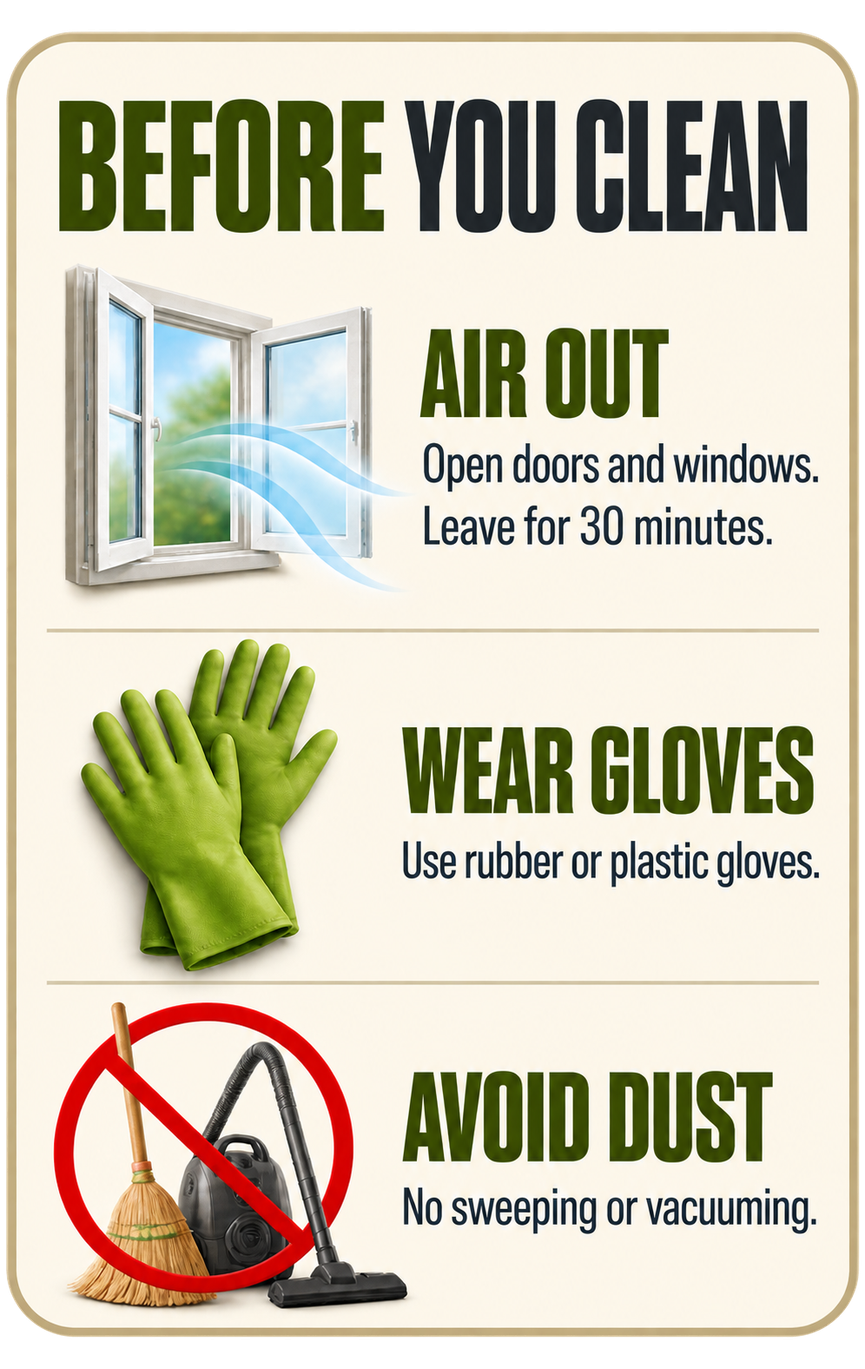
Open doors and windows to ventilate the space for at least 30 minutes, and leave during that period. Keep children and pets away from the affected area and your cleaning supplies. Don’t sweep, vacuum, dry dust, or blow debris out of a cabinet, even if there are only a few droppings. Gather rubber or plastic gloves, paper towels, garbage bags, and a household product labeled as a disinfectant. Read the directions before applying it, including the surfaces it can be used on and any required eye protection. Never mix disinfectants with other cleaning products.
Widespread contamination, numerous nests, or
rodent evidence inside air ducts calls for professional guidance. Heavy infestations require additional protective equipment and respiratory precautions. Contact your local health department or a qualified cleanup professional about the cleanup, and arrange
mouse control separately.

Wet The Droppings Before Removing Them
For an accessible hard surface, such as a cabinet shelf or tile floor, the order matters. Thoroughly wet the waste before touching it, then disinfect the surrounding surface after removal.
- Put on gloves and wet the affected area. Apply an appropriate disinfectant until the droppings and any urine are thoroughly soaked. Use the product according to its label.
- Allow the required contact time. Keep the area visibly wet for the full time specified in the disinfectant directions. Don’t spray and immediately wipe; set a timer so you aren’t guessing.
- Pick up the waste with paper towels. Place used towels in garbage bags, double-bag them, and put them in a covered trash container. Handle the material gently to avoid scattering it.
- Disinfect the surrounding hard surface. Mop or sponge the affected floor, shelf, drawer, or countertop. Follow the product’s directions for any rinsing required before that surface contacts food again.
- Finish with handwashing. Wash your gloved hands before removing the gloves, then wash your bare hands with soap and warm water.
Check the disinfectant label for compatibility with the material you’re treating. A product intended for hard, nonporous surfaces may not be suitable for unfinished wood, fabric, or electronics. If the surface falls outside its listed uses, get guidance on an appropriate method before proceeding.
Decide What To Clean And What To Discard
Food needs a separate decision from the shelf it sat on. Discard food exposed to rodent contamination when it’s in paper or plastic packaging, including pet food. Don’t keep the contents of a chewed cereal box by transferring them into a clean container, and don’t donate contaminated food.
Damaged cans and jars also belong in the trash. Intact all-metal cans and hermetically sealed jars of commercially prepared food may be salvageable, but they require the FDA’s full washing and sanitizing procedure before opening or storage. Simply wiping the lid isn’t that procedure. If you can’t confidently assess the container or complete the process, discard it in a covered bin that people and animals cannot access.
For belongings, consider both the contamination and the material. Throw away cardboard storage boxes contaminated with urine or droppings; hard plastic, glass, and metal storage containers can often be disinfected. This guidance for storage containers does not mean contaminated food in plastic packaging should be kept.
After droppings have been disinfected and removed, potentially contaminated clothing, bedding, and washable stuffed toys need hot water and detergent, followed by high-heat drying or drying in sunlight. Check care labels before treatment and seek specialist advice for items that can’t tolerate it. Carpets and upholstered furniture require appropriate shampooing or steam cleaning after the waste is treated and removed.

Check For Continued Mouse Activity
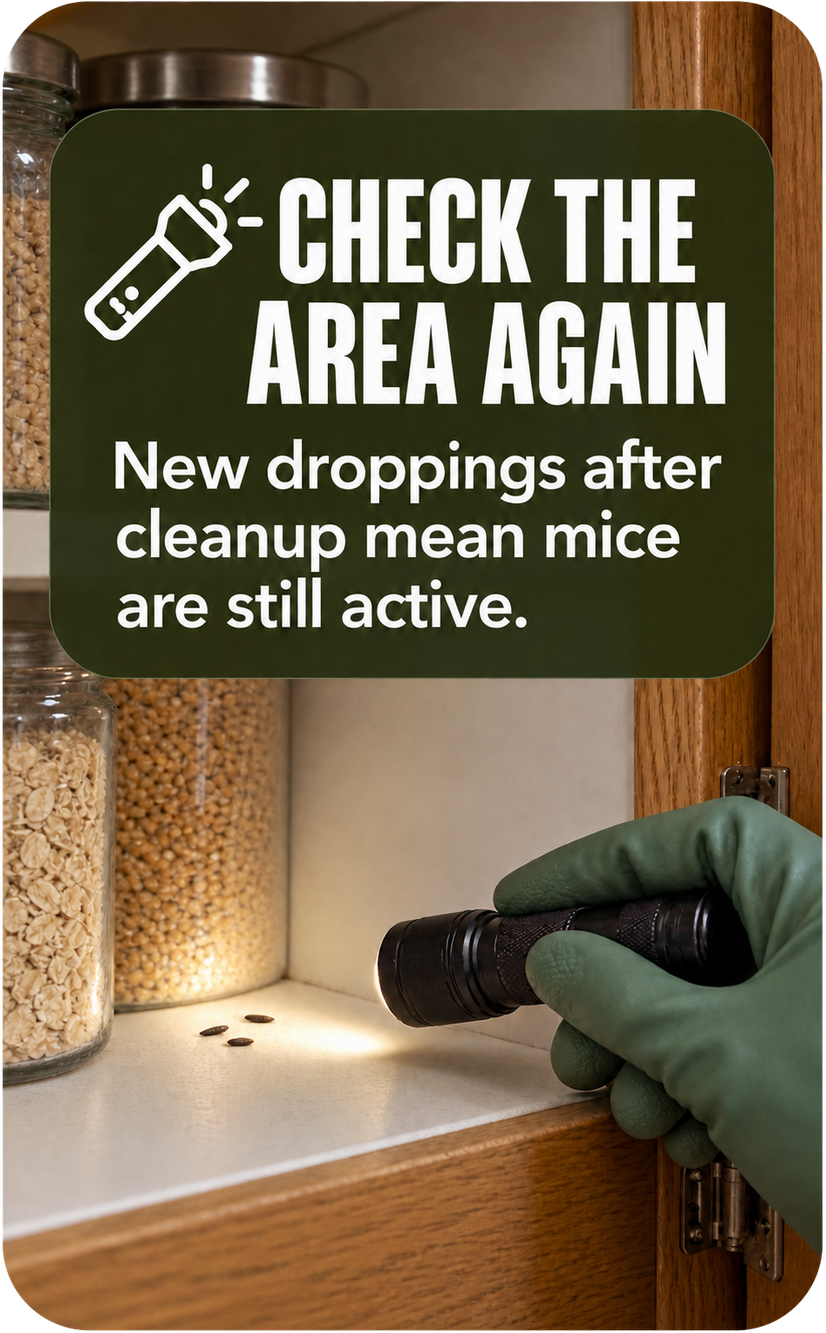
Record where you found the droppings and when you cleaned each area. A quick photo taken without disturbing the waste can also help you explain the pattern to a technician. Recheck those accessible locations regularly, including the back of the affected drawer and the shelf beneath it.
Trying to judge an infestation from the apparent age of droppings is unreliable. New droppings in a thoroughly cleaned area provide clearer evidence that rodents remain active. Keep track of new gnaw marks or damaged packaging as well, and use the same cleanup precautions whenever waste reappears.
Spokane Pest Pro’s mouse-control approach includes discussing where you’ve noticed activity, placing interior trap boxes, and inspecting the home’s exterior for entry points. The team seals smaller gaps and documents larger repairs for the homeowner to arrange, such as damaged siding or weather stripping.
If droppings return after cleanup, contact us about mouse control. Share the locations, cleanup dates, and any photos so the inspection can focus on where activity has continued.