
Mouse Control In Homes With Dogs And Cats
How To Handle A Mouse Problem When You Have Pets
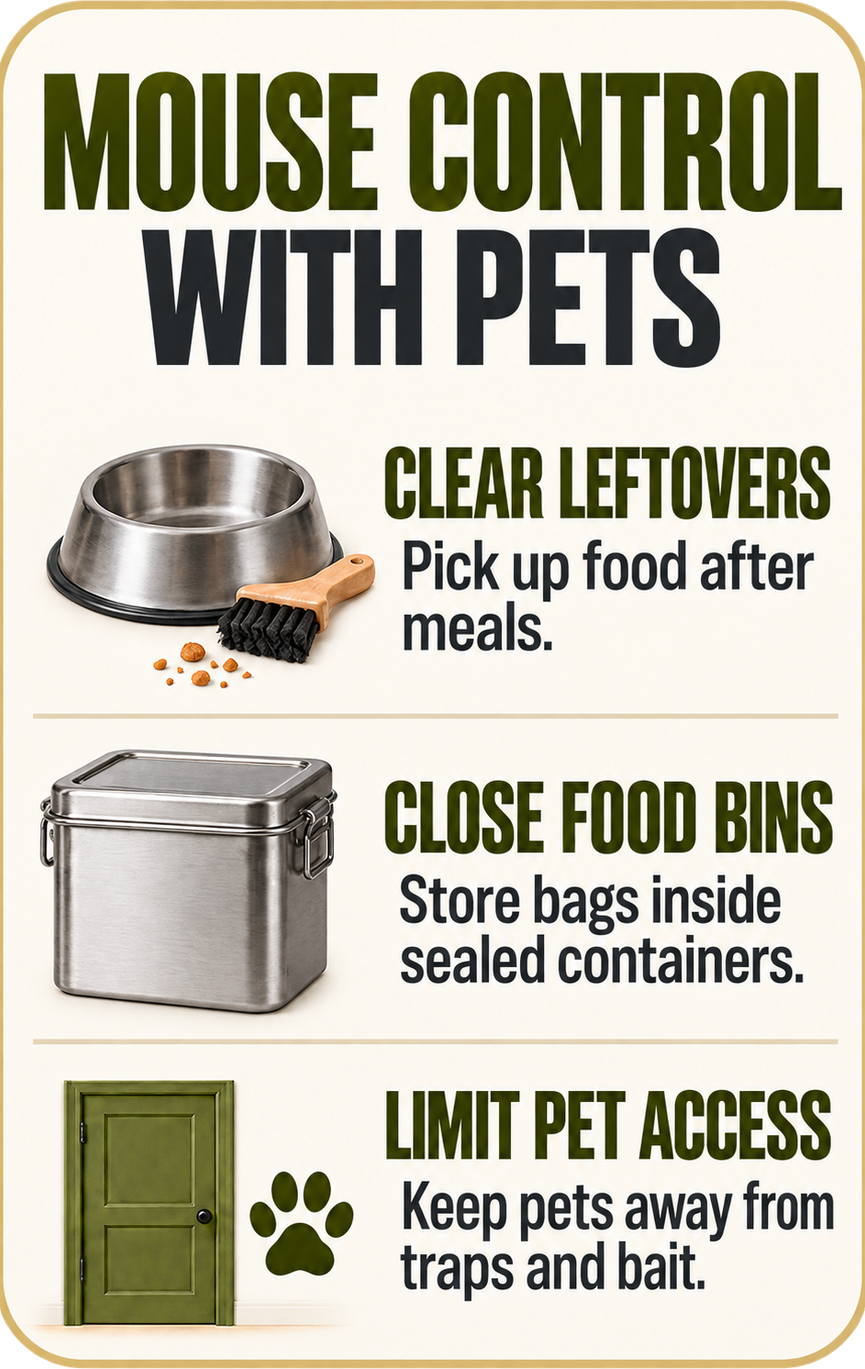
Before putting down a mouse trap, check whether your dog or cat can reach it. Behind a sofa or beneath a cabinet may still be accessible to a curious pet. Mouse control needs to account for your animal’s actual habits, including where it goes when you’re asleep or away.
A cat that catches a mouse hasn’t necessarily cleared the infestation. Mice can nest and travel in spaces pets cannot reach, so sightings and other evidence still need follow-up.
Choose Placement With Your Pets In Mind
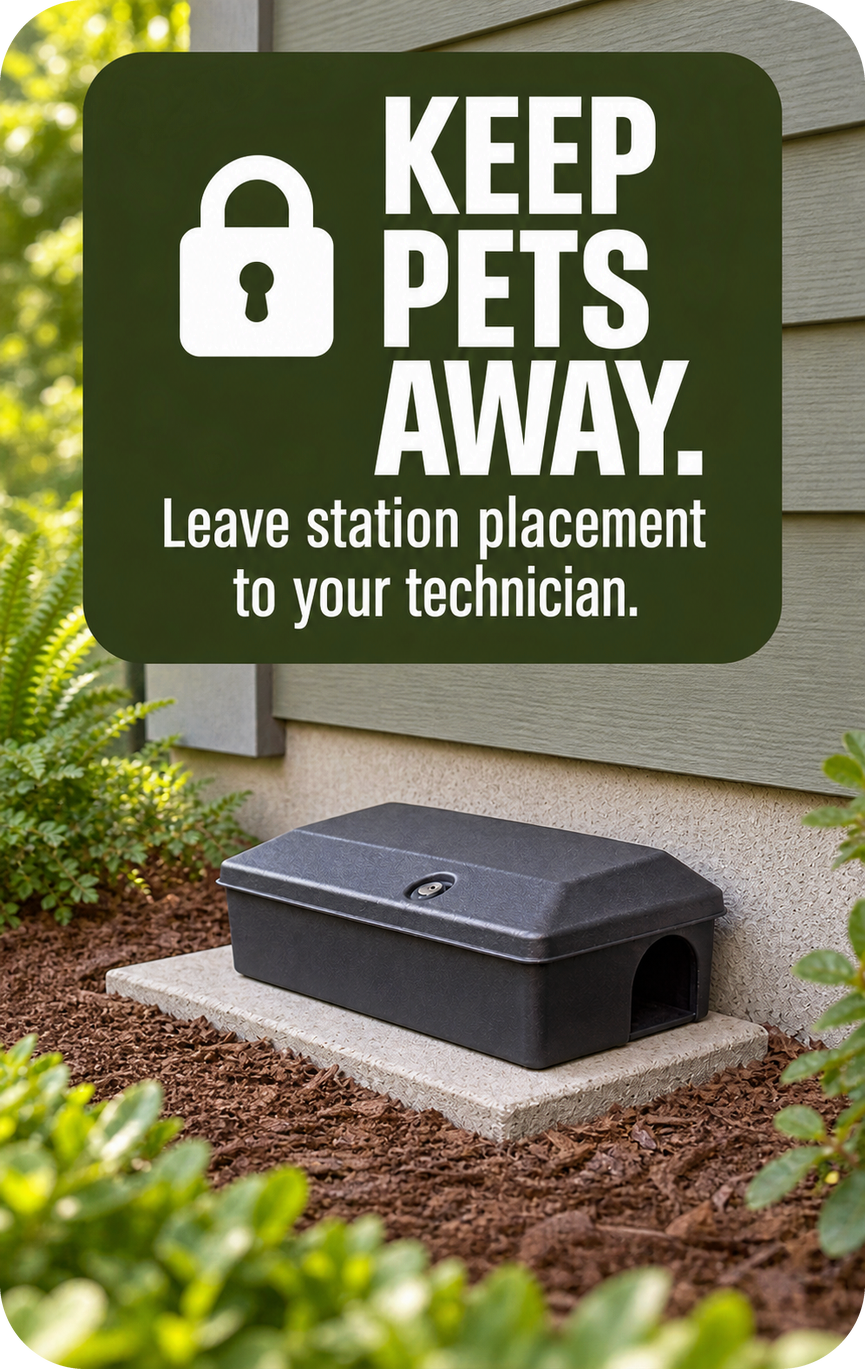
A trap box and a bait station do different jobs. A trap box houses a device that catches mice, while a rodenticide bait station contains poisoned bait that mice eat. Ask what each box contains and how it will be used before anything is placed in your home or yard.
Exposed snap traps can injure pets that investigate them. Rodent bait also needs careful placement because ingredients that attract mice can appeal to dogs and cats. Putting either behind furniture doesn’t resolve the access problem if your pet can squeeze underneath, reach around it, or move the furniture.
For store-bought bait stations, read the specific product label. Some stations are tested for resistance to children but aren’t intended for areas pets can access. Others offer additional protection against dogs. A tamper-resistant station reduces access to bait; it still needs the placement and handling specified on its label.
Keep bait inside the station supplied with a consumer product, and store unused products where pets cannot get them. If you already have traps or bait out, tell your technician what you used and where. Save the packaging or take a clear photo of the label so the product can be identified.
Keep Pet Food From Feeding Mice
A bowl of kibble left out overnight gives mice an accessible meal. Where your pet’s feeding plan allows, offer food at mealtimes and pick up leftovers afterward. If your veterinarian has recommended continuous access to food or a particular schedule, discuss changes with them before altering it.
Check beneath feeding mats and along nearby cabinet edges for spilled kibble. Wash and dry food bowls after use, and follow storage instructions for leftover wet food. Continue providing fresh drinking water for your pets; removing their water isn’t an appropriate mouse-control measure.
Put dry food in a sturdy, rodent-resistant container with a tight-fitting lid. Keeping the original bag inside preserves the product name, lot number, and other details you may need for a recall. Close the container after every feeding, and wash and dry it between bags.
Treat pouches and spare food bags deserve the same attention as the main food supply. Check supplies kept in the garage, laundry room, or a low pantry cabinet. If mice have chewed into a bag or contaminated the food, discard the affected supply rather than feeding it to your pet.

Plan The Visit Around Your Household
When you arrange mouse control, mention your pets before the appointment. “We have a dog” is a start, but information about chewing, digging, climbing, and access to the yard is more useful for deciding where equipment can go.
- Give the technician a picture of everyday life in the house:
- Where pets eat and sleep, including rooms they enter at night.
- Whether a dog digs along the foundation or chews unfamiliar objects.
- Where a cat climbs, hides, or reaches behind furniture.
- Any pet doors, outdoor runs, or visiting animals that affect access.
Ask where pets should stay while the technician works and whether any areas need to remain off limits afterward. Have a separate room available if that is part of the agreed plan. Tell everyone in the household, including dog walkers or pet sitters, which doors need to stay closed and which areas pets must avoid.
Spokane Pest Pro’s mouse control process uses interior trap boxes and exterior bait stations. The outdoor stations hold secured bait inside locked housings bolted to concrete anchor pads. Knowing which devices are indoors and outdoors helps you discuss access around your particular pets, including animals that spend time in the yard.
The service also includes inspecting the home’s exterior for mouse entry points and sealing smaller gaps. Larger repairs are documented for the homeowner to arrange. When you contact Spokane Pest Pro, describe both the mouse activity and any pet behavior that could affect treatment placement.

Monitor Treatment And Respond To Possible Exposure
Once equipment is placed, follow the technician’s instructions for checking and handling it. Don’t relocate a box to make cleaning easier or put it back somewhere different after moving furniture. If your pet starts pawing at a station or you notice damage to a housing, keep the animal away and contact the technician.
Keep pets away from captured or dead rodents as well as the control devices. Eating a poisoned rodent can expose a pet to rodenticide, although the risk depends on the product and amount involved. Ask who will remove rodents and how you should report one found during treatment.
If your pet may have swallowed rodent bait or a poisoned mouse, contact your veterinarian, an emergency veterinary clinic, or ASPCA Poison Control at 888-426-4435 immediately. Don’t wait for symptoms, and don’t induce vomiting unless a veterinary professional directs you to. Have the product packaging or treatment information available when you call.
Before the technician leaves, confirm which changes you should report and how to reach them with questions. If feeding locations, pet access, or furniture arrangements change later, check whether the treatment setup needs adjustment before moving any devices yourself.